
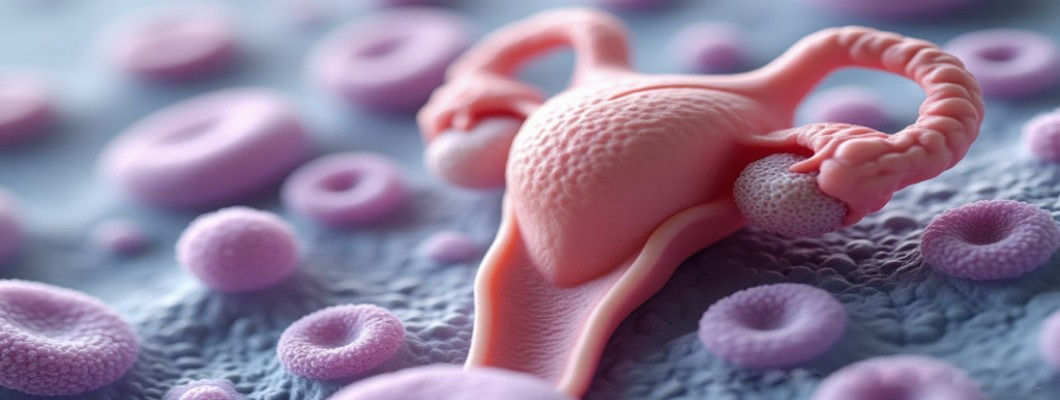
December 15, 2025 – A recent laboratory study, published in Frontiers in Pharmacology, investigates the effects of two cannabinoids, cannabidiol (CBD) and Δ9-tetrahydrocannabinol (THC), on ovarian cancer cells in vitro. This research was conducted by an international team of scientists from Khon Kaen University (Thailand) and Jinzhou Medical University (China), led by PhD researcher Siyao Tong and supervised by Professor Bandit Chumworathayi.
Background: Cannabinoids in Ovarian Cancer Cell Research
Ovarian cancer is one of the most aggressive cancers affecting the female reproductive system. It is often referred to as a “silent killer” due to its subtle early symptoms, with many cases diagnosed at late stages. Globally, over 295,000 new cases are reported each year, leading to approximately 185,000 deaths.
While surgery combined with platinum-based chemotherapy remains the standard treatment, challenges such as drug resistance and side effects persist. Laboratory studies, such as this in vitro investigation, aim to understand how compounds like CBD and THC interact with ovarian cancer cells at a molecular level. Such preclinical research is critical for guiding future scientific studies and exploring potential cellular mechanisms without implying direct clinical application.
Study Focus: CBD and THC in Laboratory Experiments
CBD and THC are the main bioactive compounds found in cannabis. CBD is non-psychoactive, while THC has psychoactive properties. Previous studies have suggested that both compounds may influence cancer cell growth, but their combined effects on ovarian cancer cells remained unclear.
This laboratory study focused on three main questions:
1. How do CBD and THC, individually or in combination, affect ovarian cancer cell growth in vitro?
2. Does the combination demonstrate selective effects on cancer cells compared to normal ovarian cells under laboratory conditions?
3. What molecular pathways are involved in the observed cellular responses, particularly those related to cell growth and survival?
In-Vitro Effects of CBD and THC on Ovarian Cancer Cells
The researchers tested the effects of CBD and THC on two ovarian cancer cell lines: A2780 (chemotherapy-sensitive) and SKOV3 (chemotherapy-resistant), as well as normal ovarian epithelial cells (IOSE80). Both cannabinoids independently inhibited cancer cell growth to some extent. However, when combined at a 1:1 molar ratio, their inhibitory effects were enhanced, suggesting potential synergistic interactions in vitro. Normal epithelial cells exhibited much lower sensitivity under the same conditions, indicating selective responses in this laboratory setting.
Mechanistic Insights from Laboratory Experiments
The study observed that CBD and THC together influenced key cellular processes, including cell cycle regulation and apoptosis-related pathways. Changes in the PI3K/AKT/mTOR signaling pathway, which is central to cell proliferation and survival, were also detected. Additionally, some modulation of tumor suppressor gene activity was noted. These findings provide preliminary insights into how cannabinoids may interact with ovarian cancer cells at the molecular level, offering valuable directions for further preclinical research.
Implications and Limitations
It is essential to emphasize that this study was conducted entirely in vitro with cultured cells. These findings do not constitute evidence that CBD or THC can be used to treat ovarian cancer in humans. Clinical applications require extensive research, including animal studies and controlled human trials, to evaluate safety, dosage, and therapeutic potential.
THC is a regulated substance in most European countries, and its use is restricted to medical or research settings. Therefore, this laboratory study should be interpreted solely as a contribution to cannabinoids research and preclinical scientific investigation.
Conclusion
This in vitro study adds to the growing body of knowledge on cannabinoids and ovarian cancer cell interactions. By investigating the combined effects of CBD and THC, the research highlights potential molecular pathways and cellular responses that may be relevant for future preclinical studies. While far from clinical application, these findings contribute to a deeper scientific understanding of cannabinoids and support further controlled laboratory research.
Leave a Comment