
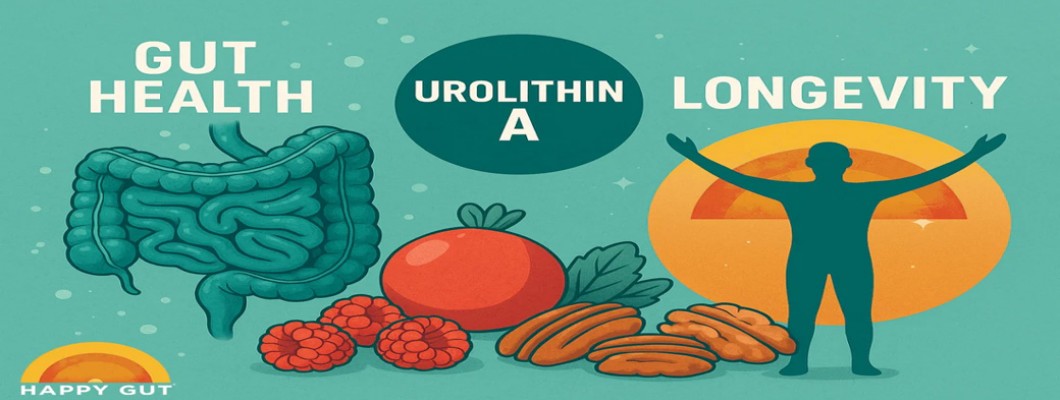
Introduction: The Growing Challenge of Metabolic Disorders
Obesity and related metabolic conditions, including type 2 diabetes and metabolic syndrome, have become one of the most significant global health challenges.
Although lifestyle interventions, pharmacological treatments, and bariatric surgery can be effective, they often face limitations such as long-term adherence issues or potential side effects.
In recent years, scientific attention has increasingly shifted toward a new regulatory layer of human metabolism — the gut microbiome and its bioactive metabolites.
Among them, Urolithin A (UA) has emerged as a particularly promising compound due to its role in mitochondrial function and metabolic regulation.
1. What Is Urolithin A and Why Does It Depend on Diet?
Urolithin A is not directly present in food. Instead, it is produced through a multi-step metabolic process:
• Foods such as pomegranates, berries, and walnuts contain ellagitannins
• These compounds are converted into ellagic acid in the gut
• Gut microbiota further metabolize them into Urolithin A
In other words, Urolithin A production depends heavily on an individual’s gut microbiome composition.
2. Why Do People Respond Differently to the Same Diet?
Not everyone can efficiently produce Urolithin A from food. This variability is explained by different Urolithin Metabotypes (UM phenotypes).
The three main types include:
UM-A (approx. 55% of the population)
Able to consistently produce Urolithin A and its metabolites.
UM-B (more frequently observed in overweight/obese individuals)
Produces a wider range of metabolites, with still-evolving clinical significance.
UM-0 (about 10–17% of individuals)
Lacks key gut microbes required for Urolithin A production.
This explains an important concept:
The same dietary intake (e.g., pomegranate consumption) can lead to very different biological outcomes across individuals.
For some populations, direct supplementation of Urolithin A or microbiome-targeted interventions may therefore be more effective.
3. How Urolithin A Influences Metabolic Health
Urolithin A does not act through a single pathway. Instead, it regulates metabolism through multiple interconnected mechanisms.
3.1 Enhancing Fat Utilization and Energy Expenditure
The body stores and burns energy primarily through two types of adipose tissue:
• White adipose tissue (WAT): energy storage
• Brown adipose tissue (BAT): energy consumption and heat production
Research suggests that Urolithin A may help promote a shift toward a more metabolically active state by enhancing energy expenditure.
Key mechanisms include:
• Upregulation of mitochondrial biogenesis regulators such as PGC-1α
• Activation of thermogenic pathways associated with UCP1
• Improved cellular energy efficiency
In simple terms:
The body becomes more inclined to burn energy rather than store it.
3.2 Regulating Lipid Metabolism: Reducing Storage and Enhancing Breakdown
Urolithin A appears to support lipid balance through a dual regulatory effect:
(1) Reducing fat synthesis
It downregulates pathways involved in lipid production, helping limit excessive fat accumulation.
(2) Promoting fat breakdown
It activates cellular energy-sensing pathways that enhance lipid utilization and fatty acid oxidation.
(3) Reducing dietary fat absorption
At the intestinal level, Urolithin A may inhibit lipid-digesting enzymes, potentially decreasing fat absorption from food.
3.3 Improving Inflammation and Insulin Sensitivity
Chronic low-grade inflammation is a key driver linking obesity to insulin resistance and type 2 diabetes.
Urolithin A may help regulate immune-metabolic interactions by:
• Reducing pro-inflammatory cytokines such as TNF-α and IL-6
• Improving inflammatory status in adipose tissue and liver
• Enhancing insulin signaling efficiency
In practical terms:
It may help break the cycle between chronic inflammation and metabolic dysfunction.
4. The Gut–Microbiome–Metabolism Connection
As a microbiome-derived metabolite, Urolithin A also interacts with the gut environment itself.
Research suggests it may:
4.1 Support a healthier microbiome composition
Promoting microbial balance associated with metabolic health.
4.2 Reduce metabolic endotoxin burden
Potentially lowering harmful byproducts associated with inflammation.
4.3 Strengthen intestinal barrier function
Enhancing tight junction integrity and reducing intestinal permeability (“leaky gut” risk).
5. A Multi-System Metabolic Modulator
Rather than acting on a single target, Urolithin A appears to influence multiple biological systems simultaneously:
• Energy metabolism and mitochondrial function
• Lipid synthesis and breakdown balance
• Inflammatory signaling pathways
• Gut microbiome and intestinal barrier integrity
This makes it more of a:
Multi-system metabolic regulator rather than a single-pathway compound.
Conclusion: A Promising Direction in Metabolic Research
Urolithin A represents a fascinating link between diet, gut microbiota, and host metabolism.
By influencing energy expenditure, lipid metabolism, inflammation, and gut health, it offers a multi-layered perspective on metabolic regulation.
While research is still evolving and long-term clinical outcomes require further validation, current evidence suggests that:
Urolithin A may become an important component in future strategies for metabolic health support.
Leave a Comment